Course Descriptions
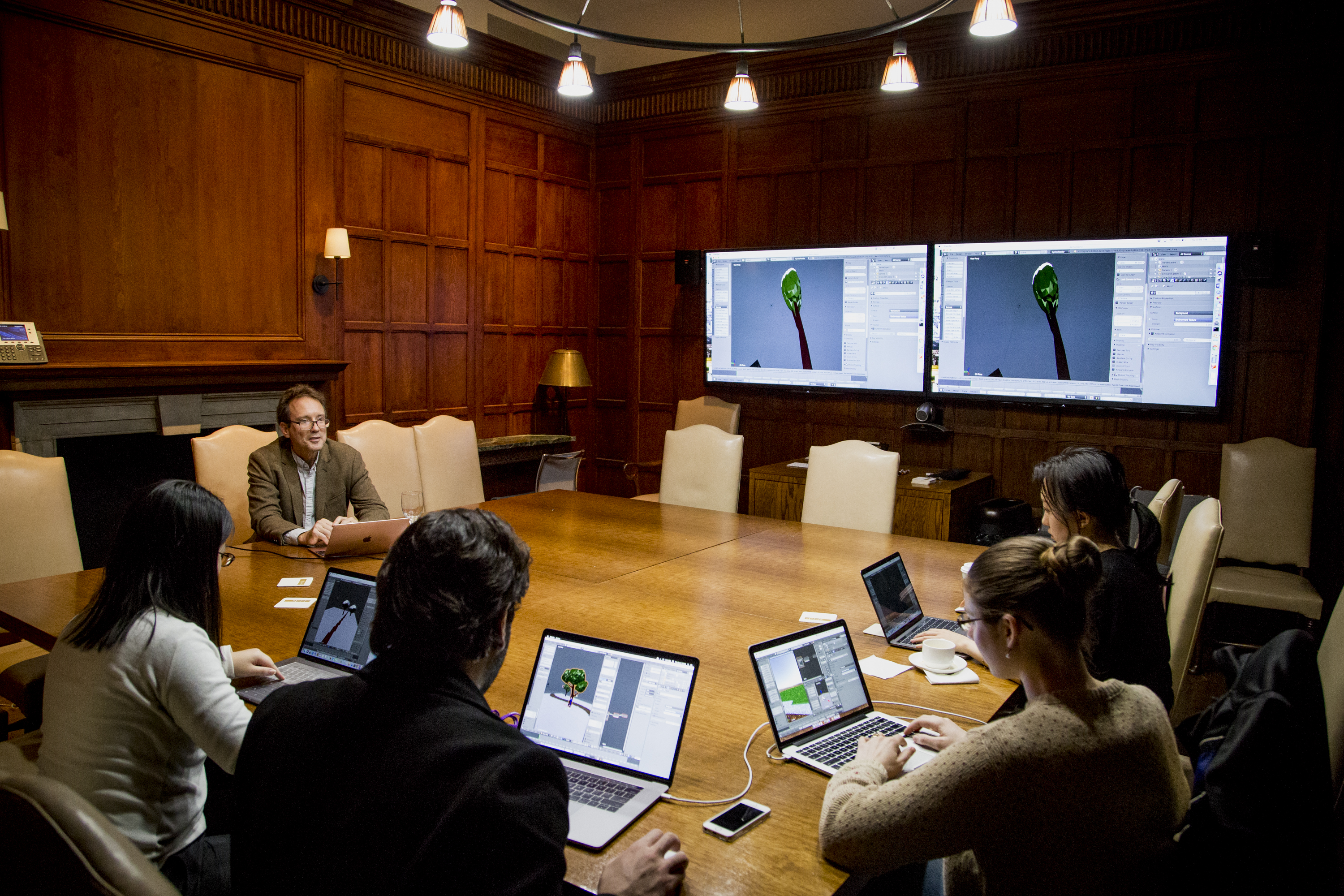 ©Kahn: Courtesy of NYU Photo Bureau
To enroll in an ISAW course, you must first obtain the permission of the instructor. You may then forward the permission email to isaw.academic.affairs@nyu.edu to get the registration access code. All classes will be held in the 2nd-floor Seminar Room at ISAW unless indicated otherwise.
©Kahn: Courtesy of NYU Photo Bureau
To enroll in an ISAW course, you must first obtain the permission of the instructor. You may then forward the permission email to isaw.academic.affairs@nyu.edu to get the registration access code. All classes will be held in the 2nd-floor Seminar Room at ISAW unless indicated otherwise.
Jump to: Fall 2026 Courses | Spring 2027 Courses
Fall 2026: Seminar on the Interconnected Ancient World
Eurasian Interconnectivity
ISAW-GA 3030-001
Lillian Tseng and Sören Stark
lillian.tseng@nyu.edu; soeren.stark@nyu.edu
Tuesdays, 2:00-5:00pm
This seminar examines patterns of interconnectivity across large parts of Eurasia from the Iron Age to the early medieval period. It shifts the analytical focus away from major imperial centers and toward the corridors, frontiers, and intermediary communities that linked them. The course explores how interconnectivity developed within diverse socio-political and cultural contexts—such as nomadic elite networks, different types of urban centers, various contact zones, and diaspora communities—giving rise to forms of cultural entanglement and hybridity through processes of transmission and exchange. Students will engage critically with interdisciplinary scholarship and develop nuanced perspectives on cross-cultural interaction in the ancient world.
Permission of the instructors is required.
Fall 2026: Research Seminars
Problems in the Archaeology of Mesopotamia and Iran
ISAW-GA 3012-001
Daniel Potts
daniel.potts@nyu.edu
Mondays, 2:00-5:00pm
Large Conference Room, 6th Floor
In this seminar we shall particularly focus on five episodes of entanglement, conflict and outright or attempted conquest. These include the mid- to late 4th millennium BC evidence for Uruk penetration in Susiana; Early Dynastic, Old Akkadian and Ur III attempts to conquer parts of southwestern Iran; Mari, Babylon and Elam in international relations; Kassite and post-Kassite relations with Middle Elamite élites; and Assyria's 'Eastern problem.' Both archaeological and cuneiform evidence will be examined to understand the motivations and potentialities of these interactions, and to evaluate the extent to which these did or did not change through time.
Reading knowledge of French and/or German and permission of the instructor are required.
Special Topics on Anatolia and Syria, 2000-500 a.C.
ISAW-GA 3012-002
Lorenzo d'Alfonso
lda5@nyu.edu
Wednesdays, 9:00am-12:00pm
During the last few years research in Anatolian protohistory is rapidly transforming. Results of new excavations and survey allows today to generate a complex narrative on the second millennium Bronze Age and the first millennium Iron Age as well as on the transition between the two that was not thinkable even fifteen years ago, as the whole period would be investigated through the research done at the three sites of Kultepe Kanesh, Boghazoy Hattusa, and Yassi Höyük Gprgion. The three sites have developed new and impressive research project and efforts in site management, on-site restoration and capacity building that are now an integral part of the teaching of zone archaeology. Besides those sites, however, several new projects have produced results that are opening completely new scenario for the research in protohistory, and that start to be received in new comprehensive works. South of the Taurus, after years of civil war there is an attempt to bring new lymph to research the protohistory of Syria. The course is a research-oriented seminar that brings to discussion different topics and methods emerging in the last few years research output devoted to the protohistory of the two regions. Part of the course will center on a collective review of monographs, conference proceedings, and papers published in top journals specialized on the area (e.g. Syria, Levant, Anatolian Studies, Anatolica, Asia Minor, Altorientalische Forschungen). At the same time, participants will be requested to present original papers associated with the field work active in the two regions, supported by the new literature. The topics which were selected and suggested directly by the participants in agreement with the instructor, with the goal to work them in a research paper.
Permission of the instructor is required.
The Environmental History of the Ancient Mediterranean World
ISAW-GA 3012-004
Greg Woolf
g.woolf@nyu.edu
Thursdays, 2:00-5:00pm
The nature of Mediterranean environments has assumed a growing importance in the study of ancient societies over the last twenty five years with growing attention to climate change and plagues in particular. This seminar will begin from longer-term patterns in the middle Holocene, looking at the kinds of man-animal-plant relations that had been established by the end of the Bronze Age, and at specific regimes of risk and specific patterns of exploitation. We will consider synergies between uplands and lowlands, forest and plain, land and sea and also look at unusual environments like wetlands and deserts before going on to explore various patterns of change in the last and first millennia. Topics to be considered are resilience, the impact of urbanism and demographic growth, the importance (or not) of interregional connectivity, endemic disease and epidemics and climate science. A knowledge of terms and concepts from the life sciences is not required, but a willingness to learn about this is.
Permission of the instructor is required.
The Sciences of the Stars in Ancient Near Eastern and Mediterranean Civilizations
ISAW-GA 3013-004
Alexander Jones
aj60@nyu.edu
Mondays, 2:00-5:00pm
In this course, we will explore central concerns and practices of astronomy and astrology in antiquity, using a reading of the astronomical treatise of Ptolemy (the Almagest or Mathematical Composition, c. 150 CE) as a springboard for excursions into earlier Greek, Babylonian, and Egyptian traditions. Knowledge of ancient Greek or one of the other relevant ancient languages will be an asset though not a prerequisite.
Permission of the instructor is required.
Technology and Ancient Economic Growth: (or why we've never been ancient)
ISAW-GA 3013-005
Roderick Campbell
rbc2@nyu.edu
Fridays, 9:00am-12:00pm
Economic growth and technological innovation are two ever-present narratives of our contemporary lives, but what do they have to do with ancient societies? Many people (and most modern economists) assume that ancient economies experienced only incremental growth and that technological innovation was not a major economic factor before the first Industrial Revolution. At the same time, since its 19th century beginnings, archaeology (often under the banner of some form of evolutionism), has been documenting societal change over the millennia of the human career and tying it to technological advances. While talk of revolutions - agricultural, urban or otherwise - has fallen out of fashion as archaeologists have come to recognize the complexity and multi-scalar nature of processes such as domestication and urbanization, it is nevertheless obvious that the gulf between the lives of English farmers at the beginning of the Industrial Revolution and those who built Stonehenge is vast. Nor are the processes that led to our current situation unrelated to those that brought a world of hunter-gatherers to the early Modern period. Even while it may seem obvious that there is a clear need to bridge the gap between economics and ancient history, the obstacles are not trivial. Both the particularities of disciplinary history and the very real difficulties of adapting method and theory developed for one kind of data set to sources of a very different nature have contributed to the problem. And yet, as the very success of our economic growth threatens to choke the life from the planet, understanding how we got here could hardly be more relevant.
In this course we will proceed from an interrogation of basic concepts such as "economics", "economic growth" and "technology", to an exploration of the diverse approaches to their study across a variety of regional and disciplinary traditions. The goal of the seminar is to arrive at a clearer understanding of both economic growth and technology, how they might relate to one another and how their study might be operationalized in the ancient historical disciplines. It is expected that students will come with diverse backgrounds and interests but that they will attempt to build tools within the seminar for use within their own projects. The seminar will be largely composed of readings, discussion and presentations. There will be a final essay project.
Permission of the instructor is required.
The Greeks Overseas: Colonization, Postcolonialism, and Globalization
ISAW-GA 3012-005 (cross-listed at Institute of Fine Arts as FINH-GA 2523-001)
Antonis Kotsonas and Clemente Marconi
ak7509@nyu.edu; cm135@nyu.edu
Mondays, 9:30am-12:15pm
Seminar Room, Institute of Fine Arts (1 East 78th Street)
One of the most formative phenomena in the history of the Mediterranean and the Black Sea in the 1st millennium BCE is the overseas expansion of the Greeks, widely – but not uncontroversially – known as colonization. This seminar will discuss the social, economic, political and cultural processes that shaped this phenomenon in the context of broader and theoretical informed discussions of mobility, and of cross-cultural discourses on colonialism, postcolonialism and globalization.
Opting for integrated analysis of archaeological and historical data, we will be exploring a range of topics, including: what were the main reasons and processes for colonizing; which regions or cities spearheaded overseas expansion and which were the landscapes of colonization; how should one appreciate foundation stories; what were the modes of interaction between colonists and local populations and how they are reflected on the archaeological record. Emphasis will be placed on historiography and the ways in which modern agendas, and past and current terms and concepts, have shaped our understanding of the complexities of Greek colonization. The seminar will promote an understanding of the diverse sources available for the study of the subject, including their research potential and limitations, as well as of the ways in which archaeological and textual data are interwoven in scholarly interpretations.
Permission of the instructors is required.
Databases and Network Analysis for the Ancient World
ISAW-GA 3023-001
Sebastian Heath
sebastian.heath@nyu.edu
Wednesdays, 2:00-5:00pm
This course will explore the relationship between two overlapping approaches to working with data: Graph Databases and Network Analysis. Students will learn to apply these approaches to their own work within the broad scope of the Ancient World. A "Graph Database" is a collection of heterogeneous entities and the relationships between them. The software tools that allow querying of these collections start from the perspective of the individual entities and allow these entities to be selected, grouped, and counted. For the purposes of this course, a "Network" is a collection of nodes and the edges that connect them to other nodes in the same set. A focus of the tools for working with networks is the whole collection. Which nodes are highly connected? What is the nature of the paths that exist between all the nodes? What subgroups exist within a network and which nodes mediate between those subgroups? It is the case that 'nodes' are analogous to 'entities' and that 'edges' are analogous to 'relationships'. Starting with working examples, the course will explore these similarities as students learn how to implement these concepts within the context of their own work. How do these generic terms, methods, and questions relate to the past phenomena we study? Existing resources, including the Wikidata graph database and the networks that can be derived from it, will introduce students to specific tools such as the SPARQL query language and the Python programming language. Visualization of results will be one focus of our work. While there is no prior technical expertise required, an openness and commitment to learning new digital methods is essential. As the course progresses, students will increasingly work with their own data and this will lead to the development and implementation of a final project that uses the methods we learn in class. Weekly readings will explore working examples of both technologies and explore the impact they are having on scholarship and research in the Ancient World. The course may be particularly useful to archaeologists, historians, art historians, and philologists who want to explore how Graph Databases and Network Analysis can contribute to their own research.
Permission of the instructor is required.
Text Analysis for Historical Language Research
ISAW-GA 3023-002
Patrick J. Burns
pjb311@nyu.edu
Thursdays, 9:00am-12:00pm
This course introduces students to computational research methods helpful for producing data-driven scholarship involving large collections of historical-language text. Drawing on relevant topics in exploratory data science, corpus linguistics, and natural language processing, the course provides a forum for students to develop hands-on skills in computer programming (using Python), focused primarily on managing textual data, string manipulation, text mining and analysis, language modeling, and data visualization. Special attention will be given to the use of word embeddings, transformer models, and large language models and their applicability to historical-language text collections. Demonstrations throughout the course will draw primarily on English-language examples, but because of the philological range and diversity at ISAW, students are encouraged to work with digitized text collections in the languages most relevant to their research. There are no prerequisites, though students are expected to be open to reading, writing, and editing computer programs; students are required to bring laptops to class. Note that historical-language text for the purpose of this course covers texts or collections of texts written before the Early Modern period.
Permission of the instructor is required.
Fall 2026: Other Courses
Advanced Ancient Egyptian I
ISAW-GA 1002-001
Marc LeBlanc
marc.leblanc@nyu.edu
Fridays, 2:00-5:00pm
This course will focus on reading Middle Egyptian texts in a variety of genres. Special consideration will be given to the grammar of the texts, as well as the materiality and historical, cultural, and archaeological context.
Prerequisites: ISAW-GA 1000, "Intro to Ancient Egyptian I," and ISAW-GA 1001, "Intro to Ancient Egyptian II" (or equivalent coursework).
Permission of the instructor is required.
Spring 2027: Seminar on the Interconnected Ancient World
The Eurasian Bronze Age: Interconnectivity, Technology and Society
ISAW-GA 3031-001
Roderick Campbell and Lorenzo d'Alfonso
rbc2@nyu.edu; lda5@nyu.edu
Tuesdays, 2:00-5:00pm
Permission of the instructor is required.
Spring 2027: Research Seminars
As Below, So Above: Ritual Pits, Foundation Deposits, and Other Practices of Space and Place
ISAW-GA 3012-005
Beate Pongratz-Leisten and Amanda Cates Ball
bpl2@nyu.edu; acb9487@nyu.edu
Thursdays, 9:00am-12:00pm
Place is essential to individual and corporate identities; beyond architecture and landscape monuments the creation of place, i.e., the investment of human activity into space as an enactment and materialization of communal identity occurred in a variety of cultural contexts. These practices include the ritual deposition of artifacts, such as votives or cultic accessories, as well as the burial of detritus and human remains. Additionally, particular locales such as the foundations of temples or house/places dedicated to ancestor worship might be demarcated by foundation deposits and burials of human and/or animal remains. Implements used in cultic practice, due to their potency acquired through the association with the divine, could not easily be disposed of and thus may have required containment through burial in purpose-made pits. Moreover, purification of a person that occurred outside a building or the mouth-washing of a statue, the procession of a god and other cultic procedures required the temporary sacralization of space through either ritual means and/or visible demarcation of space. All of these cultural practices were meaningful to the communities regarding their definition of identity and group-belonging. In this course, we will take an interdisciplinary, cross-cultural approach to consider how the creation of place, and thus the creation or maintenance of identity, may be read into historical and archaeological evidence. Our case studies will range from texts describing the intention behind their deposition to trash pits that may have gained symbolic significance with the passage of time.
Requirements: Students will be expected to develop a research project from their chronological and geographical specialization, which they will present to the class and submit as a research paper. Grading will occur on the basis of participation in the discussion 50%; presentation 25% and written paper 25%.
Permission of the instructors is required.
Scientific Texts and Teaching in Later Antiquity
ISAW-GA 3012-006
Alexander Jones
aj60@nyu.edu
Fridays, 2:00-5:00pm
This course will explore aspects of the circulation, preservation, teaching, commenting, and editing of Greek scientific texts from the second century CE (the time of Ptolemy and Galen) through the ninth and tenth centuries (the time of the earlier minuscule manuscripts). Knowledge of ancient Greek at an intermediate level will be required.
Permission of the instructor is required.
The Transmission of Greek and Persian Science into Arabic
ISAW-GA 3013-004
Robert Hoyland
rgh2@nyu.edu
Wednesdays, 9:00am-12:00pm
In the course of the eighth-tenth centuries AD thousands of texts were translated from foreign tongues (especially Greek, Syriac and Persian) into Arabic. So extensive was this activity that modern Western scholars have labelled it a movement, "the translation movement". The epithet is well deserved in that the activity was not sporadic or haphazard, but to a substantial degree thorough and systematic. One of the key factors driving this movement were the demands for applied and theoretical scientific knowledge made by those engaged in running the vast Muslim empire, now stretching from Morocco to Afghanistan. Perhaps just as important, at least in the eyes of the Muslim rulers who patronized this activity, was the desire to emulate and outdo the Persian Emperors whom they had replaced, basing themselves in Baghdad, only a stone's throw away from the old Persian imperial capital of Seleucia-Ctesiphon.
One of the aims of this course will be to look at the debates about the nature of the "Translation Movement" that have arisen in the twenty years since Dimitri Gutas published his influential Greek Thought, Arabic Culture (Routledge, 1998), in particular the importance of non-Greek languages in this Movement.
Prerequisites: Intermediate ability in either Greek or Syriac or Arabic
Permission of the instructor is required.
The Archaeology of Africa: Introductions and Interconnections
ISAW-GA 3013-005
Jay Stephens
js15759@nyu.edu
Mondays, 2:00-5:00pm
Large Conference Room, 6th Floor
Continental Africa – host to the evolution of the genus homo, the world's oldest examples of artistic expression, and to diverse cultures, environments, and resources – is often relegated to discussions of "periphery" when framed within a global lens or as the home to individuals who were forcibly displaced during the Atlantic slave trade. In the not-too-distant past, philosopher Georg Hegel wrote, "For [Africa has] no historical part of the World; it has no movement or development to exhibit...", while former French President Nicolas Sarkozy remarked in 2007 that, "...[t]he tragedy of Africa is that the African has not fully entered into history...". The intention of this course is not to force the continent and its communities onto the stage and into the spotlight, but rather to discuss how they were always part of an interconnected world and active participants in the historical process. Whether expressed through large-scale migrations, wide reaching trade networks, or more ephemeral transmissions of knowledge, communities within continental Africa created and maintained dynamic cultures, connections, and traditions that tied them to far-flung places outside and within the continent. In this course, we will survey the myriad evidence that places African communities within this wider lens and the cultures and states who called this continent home.
Permission of the instructor is required.
Transcultural Art History
ISAW-GA 3013-006
Lillian Tseng
lillian.tseng@nyu.edu
Mondays, 2:00-5:00pm
This seminar explores how art moves, transforms, and acquires new forms and meanings across cultural boundaries, emphasizing processes that transcend any single region or tradition. Students examine key concepts such as circulation, translation, appropriation, repurposing, syncretism, and hybridity to analyze objects, motifs, and techniques in diverse cultural contexts. The course highlights how artworks and material culture function as active participants in transcultural networks, revealing patterns of exchange, adaptation, and creative entanglement that shape visual expression and cultural meaning.
Permission of the instructor is required.
The Digital Humanities of the Human Body
ISAW-GA 3023-001
Sebastian Heath
sebastian.heath@nyu.edu
Wednesdays, 2:00-5:00pm
Permission of the instructor is required.
Spring 2027: Other Courses
Topics in Roman Provincial Archaeology
ISAW-GA 3003-001
Greg Woolf
g.woolf@nyu.edu
Thursdays, 2:00-5:00pm
In this course we will look at some of the most recent work conducted on a selection of Roman provinces. Key issues to consider will be the relationship of Roman-period economic and social forms to those of the pre-conquest period, the specific local forms taken by empire-wide phenomena such as urbanism and rural settlement, and the historiography of research in each region. Towards the end of the course there will be a change to discuss wider patterns, but we will begin from focusing on the experience and record from individual provinces.
Permission of the instructor is required.
This course is worth 4 credits. Please be sure to select the correct number of credits when registering.
Advanced Ancient Egyptian II
Niv Allon
Niv.Allon@metmuseum.org
ISAW-GA 1003-001
Fridays, 9:00am-12:00pm
This course will focus on reading Middle Egyptian texts in a variety of genres. Special consideration will be given to the grammar of the texts, as well as the materiality and historical, cultural, and archaeological context.
Prerequisites: ISAW-GA 1000, "Intro to Ancient Egyptian I"; ISAW-GA 1001, "Intro to Ancient Egyptian II"; and ISAW-GA 1002, "Advanced Ancient Egyptian I" (or equivalent coursework).
Permission of the instructor is required.