ISAW Announces 2026-27 Cohort of Visiting Research Scholars
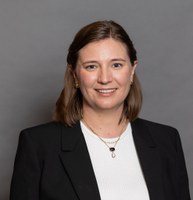 Amanda Cates Ball
Visiting Assistant Professor 2025-27
Amanda Cates Ball is a Mediterranean archaeologist, whose research focuses on sacred landscapes and material evidence of cultural interaction between Greeks and Thracians in the northeast Aegean. She received her PhD in Classics from the University of North Carolina at Chapel Hill in 2025, her MA in Classical Archaeology from UNC Chapel Hill in 2019, her MA in Art and Archaeology of the Mediterranean World from the University of Pennsylvania in 2015, and her BA in Classical Studies from UPenn in 2014. She has taught a wide range of courses on topics related to archaeology, art history, and classical studies at UNC Chapel Hill and at Kenyon College. She has also been involved with American Excavations at Samothrace since 2018, and has served as trench supervisor, survey team supervisor, and field supervisor.
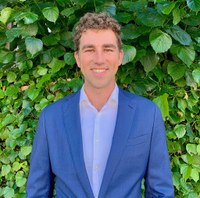 Nicholas Bartos
Research Scholar 2026-27
Nicholas Bartos is delighted to join ISAW as a Research Scholar and to serve as the George F. Bass Lecturer (Archaeological Institute of America National Program) for the 2026–27 academic year. Prior to coming to New York, he was an Assistant Professor (Full-Time Adjunct Appointment) in the Department of Classics at the University of California, Los Angeles (2024–26). He completed a PhD in Classics at Stanford University (2024), an MPhil in Archaeology at the University of Oxford (St. John's College, 2015), and a BA in Archaeology and the Ancient World at Brown University (2013). His research principally focuses on how maritime connections structured socioeconomic life in the Mediterranean and the western Indian Ocean during the Roman period. Nicholas is involved in archaeological fieldwork both on land and underwater, where he analyzes the material signatures of maritime activity to address questions about the formation of multicultural seaside communities, the development of the ancient economy, and the long-term trajectories of social history.
 Fiammetta Gori
Visiting Assistant Professor 2026-28
Fiammetta Gori is an Assyriologist specializing in the economic and institutional history of Western Asia in the early to mid-third millennium BCE, as well as the historiography of Ancient Near Eastern studies. She earned a BA in Cultural Heritage and an MA in Archaeology from the University of Florence (2017 and 2020), and a PhD in Archaeology, Art History, and History from the University of Verona (2024). The cuneiform archives of Ebla (Tell Mardikh, Syria), dating to the twenty-fourth century BCE, lie at the heart of her research. Prior to joining ISAW, she was Wissenschaftliche Assistentin at the Institute for Assyriology and Hittitology, Ludwig Maximilian University of Munich (2022–2026). At ISAW, she is developing the project "Merchants, Markets, and Power in Early Western Asia: Reconstructing Ebla's Trade Economy," examining how traders and palace authorities organized and documented long-distance trade in the mid-third millennium BCE.
 Francesca Nebiolo
 Visiting Scholar, May 2027-August 2028
Francesca Nebiolo is a Marie Skłodowska-Curie Global Fellow and Visiting Scholar at NYU's Institute for the Study of the Ancient World. She received her PhD in Assyriology from the École Pratique des Hautes Études (EPHE–PSL, Paris) under the supervision of Professor Dominique Charpin, and previously held research positions at the Collège de France and Sapienza University of Rome. She specializes in the epistolary, diplomatic, and legal documentation of the Old Babylonian period, with particular expertise in oral commitments, oath-taking practices, and the political and legal culture of ancient Mesopotamia. Her research focuses especially on the archives of Northern Mesopotamia and the Diyala region, combining philological, historical, and archival approaches to investigate how information was produced, transmitted, and legitimized in ancient societies. At ISAW, she will carry out the Marie Skłodowska-Curie Global Fellowship project TANES (Truth, Truthlikeness, and Trust: Shaping Reality in Ancient Near Eastern Societies). The project investigates how formal truths were constructed and how information, misinformation, and rhetorical strategies shaped political and legal realities in Old Babylonian Mesopotamia.
 Timur Sadykov
Research Scholar 2026-27
Timur Sadykov is an archaeologist specializing in Inner Asia. A graduate of St. Petersburg State University (Archaeology Department of the History Faculty), he subsequently participated in numerous field projects across multiple regions of the Russian Federation, before concentrating his primary scholarly focus on the Republic of Tuva and adjacent territories from 2011 onward. He is working and defended his PhD at the Institute for the History of Material Culture (St. Petersburg) in March of 2024. Timur is studying the Bronze/Iron Age transition in Inner Asia, as well as the late Iron Age - a period characterized by decentralized cultural dynamics following the collapse of the Xiongnu "empire" and preceding the emergence of the First Turkic Khaganate, during which numerous local communities flourished. As a Research Scholar at ISAW, Timur Sadykov will focus on the earliest horizon of Scythian-like cultures, which, according to recent archaeological evidence, began to expand widely across the Eurasian steppe belt as early as the VIII century BCE.
 Gregory Sattler
Visiting Assistant Professor 2026-28
Gregory Sattler is a scholar of maritime Asia with a research focus on migration, trade, networks, and interethnic cooperation. His work utilizes methodologies from the study of history, archaeology, religion, art history, and literature. He received his PhD in History from UCLA, his MA in Japanese Studies from Kyushu University, and his BA in History from National Taiwan University .Some of the fellowships Gregory previously received include the National Library of Singapore's Lee Kong Chian Research Fellowship, the Chiang Ching-kuo Foundation's Doctoral Dissertation Fellowship, and the Rotary Foundation's Rotary Yoneyama Memorial Scholarship. His language proficiencies are Chinese, Japanese, Indonesian, and Malay, and he also has a distinct interest in Chinese dialects and regional languages. Gregory's current book project is an early history of Chinese travelers and communities across the span of maritime Asia.
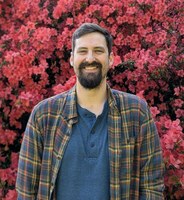 Jay Stephens
Visiting Assistant Professor 2025-27
Jay Stephens joined NYU’s Institute for the Study of the Ancient World as a Visiting Assistant Professor in the fall of 2025. Jay has a background in archaeology, materials science, and geochemistry, and applies principles and methodologies from all three fields to study the history of mining and metallurgy, particularly within southern Africa. He received his PhD in Anthropology from the University of Arizona and was previously a Postdoctoral Research Fellow in the Archaeometry Laboratory at the University of Missouri Research Reactor from 2023-2025. While at ISAW, Jay will continue research related to the Southern Africa Lead Isotope Project which uses isotopic, chemical, and microstructural methods to reconstruct the provenance for non-ferrous metals in southern Africa and the technologies with which they were produced. The project’s current focus is on the geological source for metals found at southern Africa’s earliest state, Mapungubwe, and on the timing for the adoption of bronze in the region.
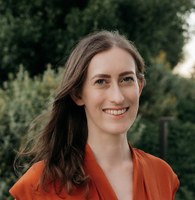 Darcy Tuttle
Research Scholar 2026-27
Darcy Tuttle is a historian and archaeologist with interests in ancient Italian religion, funerary practice, law, and historical culture. She received her PhD in Ancient History and Mediterranean Archaeology at the University of California, Berkeley in 2026. She also holds an MA in Ancient History and Mediterranean Archaeology from the University of California, Berkeley and a BA in Classical Civilization from Yale University. She is also an active field archaeologist currently involved in two projects based in Italy: the Gabii Project and the Southern Etruscan Tomb Survey. Her recently completed dissertation argues that many ancient Romans primarily viewed the afterlife as a community one hoped to join more than a place, like the heavens or the underworld, that one aimed to go to. While at ISAW, she will be developing this research into a monograph outlining a social history of the Roman afterlife.
Please click on each scholar's name to view their full profile on the ISAW website.