Portrait of Sigmund Freud at his desk by Max Pollak 1914, soft-ground etching and dry point, Freud Museum London.
RESCHEDULED: Exhibition Lecture
Emmelyn Butterfield-Rosen
Institute of Fine Arts, NYU
Due to the recent blizzard, this lecture will now take place on Friday, February 27, 2026. We look forward to welcoming you then and appreciate your flexibility.
This lecture will take place in person at ISAW.
Registration is required at THIS LINK.
From the collection of ancient Egyptian artifacts that sat atop Freud’s desk as he wrote The Interpretation of Dreams to the “hieratic” figures that proliferated in modern painting and sculpture circa 1900, Egyptian bodies played a pivotal role in turn-of-the-century European culture’s efforts to visualize the idea of the unconscious. This talk will explore how and why that was so, offering several hypotheses for why Egyptian figural art became central to the imagining of this complex psychological concept. The talk––paying special attention to Rodin’s self-described “Egyptian colossus,” his 1898 monument to Honoré de Balzac––will also probe Rodin’s highly distinctive approach to this widespread association between Egyptian art and the formal expression of the human potential for unconscious thought.
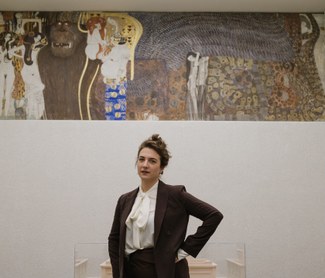 Emmelyn Butterfield-Rosen is Associate Professor of Nineteenth-Century European Art at the Institute of Fine Arts, NYU. Her first book Modern Art & the Remaking of Human Disposition (University of Chicago Press, 2021), shows how new concepts of thought and consciousness in Europe circa 1900 were materialized in art through new approaches to body language. She is currently at work on two books, one about the influence of art on the evolutionary thinking of Charles Darwin, and another on family, human fertility, and brother/sister siblinghood in the first-wave feminist era.
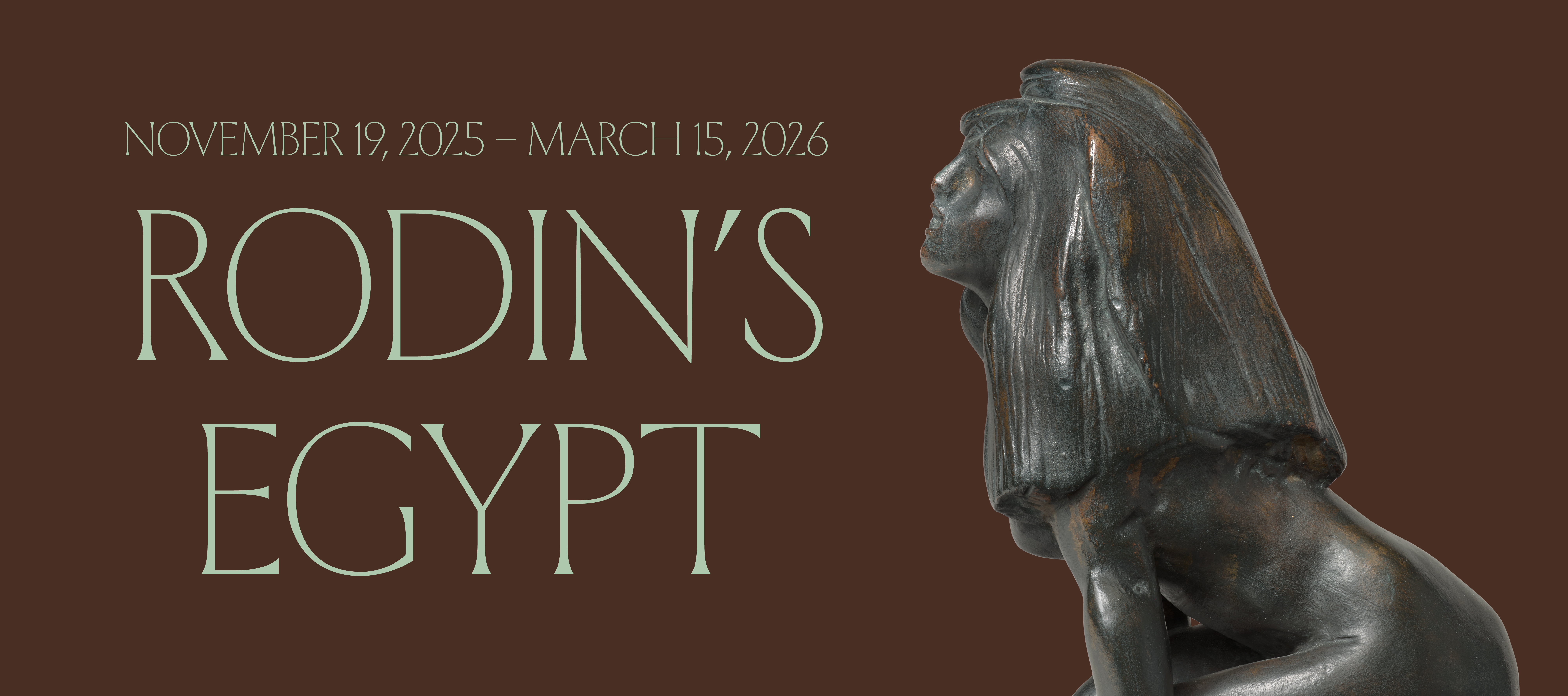
This lecture is given in conjunction with ISAW's exhibition Rodin's Egypt. This exhibition and its accompanying catalogue were made possible by generous support from the Leon Levy Foundation.
Please check isaw.nyu.edu for event updates.
ISAW is committed to providing a positive and educational experience for all guests and participants who attend our public programming. We ask that all attendees follow the guidelines listed in our community standards policy.